Deep well manual water pumps offer a reliable, off-grid water source, especially useful during power outages. These pumps, often constructed from PVC, can access water depths up to 60 feet.
What is a Deep Well Manual Water Pump?
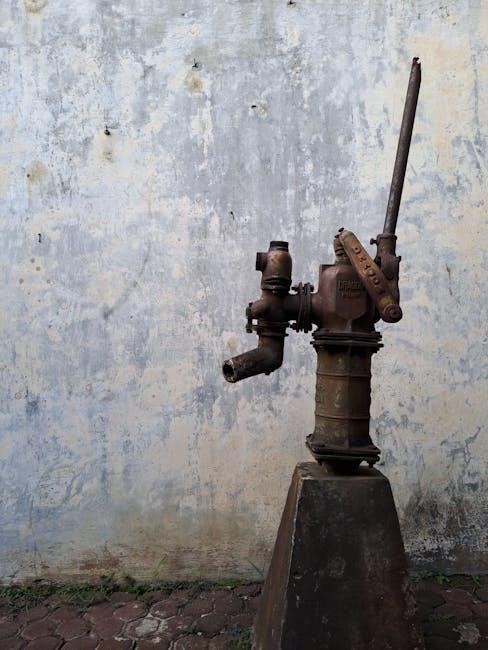
A deep well manual water pump is a mechanical device designed to lift water from underground sources exceeding typical shallow well depths – often reaching 60 feet or more; Unlike electric pumps, these operate solely on human power, making them invaluable during emergencies or in off-grid locations. They are frequently constructed using readily available PVC materials, enabling DIY construction for resourceful individuals.
These pumps utilize a piston, diaphragm, or peristaltic action to create suction and draw water up a drop pipe. The core principle involves converting manual effort into hydraulic pressure, overcoming gravity to deliver potable water. They represent a time-tested technology, offering independence from electrical grids and a sustainable water solution.
Why Choose a Manual Water Pump?
Opting for a manual water pump, particularly for deep wells, provides crucial advantages. Primarily, they offer independence from electricity, ensuring a water supply during power outages – a significant benefit highlighted by recent events. DIY PVC pump construction is cost-effective, empowering self-reliance and reducing reliance on expensive professional installations.
Furthermore, manual pumps are environmentally friendly, requiring no fuel or electricity. They are ideal for remote locations lacking grid access and offer a sustainable solution for water needs. Their simplicity translates to easier maintenance and fewer components prone to failure, contributing to long-term reliability. Choosing manual power means choosing resilience and control over your water source.

Types of Deep Well Manual Water Pumps
Deep well manual pumps include piston, diaphragm, and peristaltic designs. Piston pumps are traditional, diaphragm pumps handle contaminated water, and peristaltic pumps offer gentle action.
Piston Pumps: The Traditional Choice
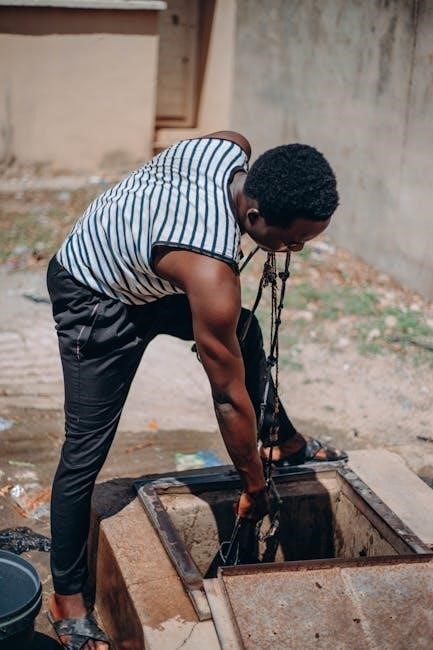
Piston pumps represent the longstanding, classic approach to manually extracting water from deep wells. Their operation relies on a reciprocating piston within a cylinder, creating suction to draw water upwards. This design is remarkably simple, contributing to its durability and ease of repair – a key advantage for off-grid or remote locations.
Historically, piston pumps have been favored for their ability to handle significant well depths, making them suitable for various geological conditions. While requiring physical effort to operate, their robust construction ensures reliable performance over extended periods. The core components, including the piston, cylinder, and connecting rod, are relatively straightforward to manufacture and maintain, further solidifying their position as a traditional and dependable choice for deep well water access.
Diaphragm Pumps: For Contaminated Water
Diaphragm pumps offer a distinct advantage when dealing with water sources containing sediment or debris. Unlike piston pumps, they don’t utilize valves directly exposed to the water flow, minimizing clogging and wear. A flexible diaphragm creates pumping action, moving water without the piston contacting the fluid itself.
This characteristic makes them ideal for wells with potentially contaminated water, where particulate matter is a concern. While potentially less efficient than piston pumps in perfectly clean water, their resilience to abrasive elements extends their lifespan in challenging conditions. They are a practical solution where water quality is questionable, providing a more reliable and low-maintenance option for accessing deep well resources despite impurities.
Peristaltic Pumps: Gentle Pumping Action
Peristaltic pumps represent a unique approach to manual deep well water extraction, employing rollers to compress a flexible tube. This action gently propels water through the system, avoiding direct contact between the fluid and pump components. This is particularly beneficial when handling sensitive or corrosive water sources.
While less common for traditional deep well applications due to potential flow rate limitations, peristaltic pumps excel in scenarios requiring precise control and minimal contamination risk. The gentle pumping action preserves water quality, making them suitable for specialized needs. Though typically requiring more physical effort for significant water volume, their reliability and suitability for delicate fluids offer a valuable alternative.
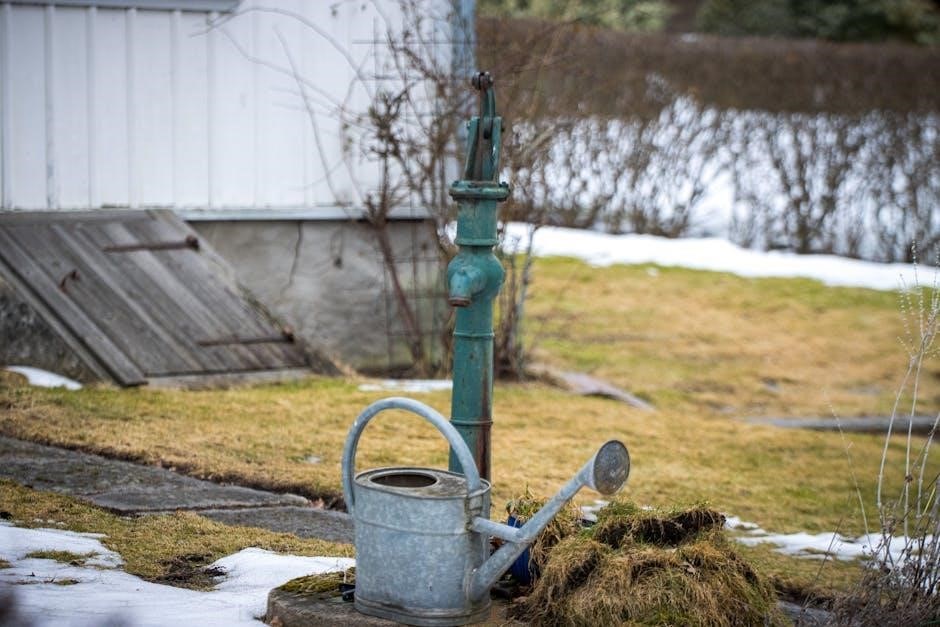
Components of a Deep Well Manual Water Pump System

Components of a Deep Well Manual Water Pumps
Essential components include the pump cylinder, piston, drop pipe with a foot valve, a handle/lever mechanism, and a well casing ensuring a secure, sealed system.
The Pump Cylinder and Piston
The pump cylinder forms the core of the manual water pump, providing the chamber where water is drawn upwards. Typically constructed from durable materials like PVC or metal, its diameter dictates the pump’s capacity and the force needed for operation. Inside this cylinder resides the piston, a crucial component featuring leather or rubber cups (or seals) that create a tight fit against the cylinder walls.

As the handle is operated, the piston moves up and down, creating alternating pressure. This action draws water from the well through the foot valve and into the cylinder during the upstroke, then expels it upwards during the downstroke. The quality of the piston seals is paramount; worn seals lead to reduced efficiency and water loss. Regular inspection and replacement of these seals are vital for maintaining optimal pump performance and ensuring a consistent water supply.
Drop Pipe and Foot Valve
The drop pipe is a crucial element, extending from the pump cylinder down into the well itself. Usually constructed from PVC, its length must match the well’s depth minus the pump’s position above ground. At the bottom of the drop pipe sits the foot valve, a one-way check valve preventing water from flowing back down the pipe when the piston rises.
This valve incorporates a weighted clapper that opens under suction, allowing water entry, and closes under gravity, maintaining the column of water within the pipe; A properly functioning foot valve is essential for priming the pump and sustaining water delivery. Regular inspection for debris or wear is vital, as a faulty foot valve results in lost prime and reduced pumping efficiency, requiring repeated priming efforts.
Handle and Lever Mechanism
The handle and lever mechanism translates human effort into the reciprocating motion needed to drive the pump piston. Typically, a long handle provides leverage, reducing the force required for each stroke. This mechanism often incorporates a fulcrum, amplifying the downward force applied to the piston rod.
The design aims for ergonomic efficiency, minimizing user fatigue during prolonged pumping. Some systems utilize a pivoting lever arm, converting circular motion into linear movement. Robust construction is paramount, as this component endures significant stress. Proper lubrication of pivot points ensures smooth operation and extends the lifespan of the mechanism. A well-designed handle and lever system maximizes pumping output with minimal exertion.
Well Casing and Seal
The well casing is a crucial structural element, preventing the well from collapsing and safeguarding the water source from contamination. Constructed from materials like PVC or steel, it extends from the surface down to the aquifer. A proper seal between the casing and the surrounding soil is vital, preventing surface water runoff and pollutants from entering the well.
This seal typically involves bentonite clay or specialized well sealants. The casing must be adequately sized to accommodate the drop pipe and foot valve. Maintaining the integrity of the casing and seal is paramount for long-term water quality and pump functionality. Regular inspections should identify any cracks or breaches compromising the well’s protective barrier.
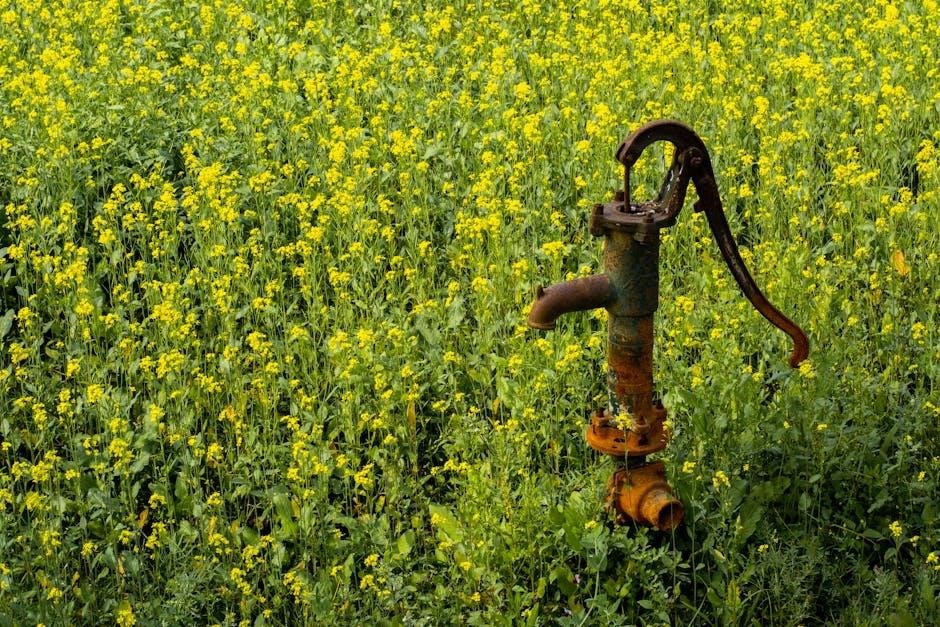
Installation Process
Installing a deep well manual pump involves determining well depth, assembling the system, carefully lowering the drop pipe with its foot valve, and thorough testing.
Determining Well Depth and Water Level
Accurately assessing your well’s depth and static water level is crucial before installing a manual deep well pump. Several methods can achieve this. A weighted tape measure, slowly lowered into the well until it hits the bottom, provides the total depth. Mark the tape at the water level to determine the distance from the well opening to the water surface – this is your static water level.
Knowing both measurements is vital for selecting the correct pump size and length of the drop pipe. The pump must be capable of lifting water from the static water level to the surface. Consider seasonal fluctuations; water levels often drop during drier periods. Accurate measurements ensure efficient pumping and prevent the pump from running dry, potentially damaging the system.
Assembling the Pump System
Proper assembly is key to a functional deep well manual water pump system. Begin by connecting the pump cylinder to the well casing, ensuring a secure and watertight seal. Attach the drop pipe to the foot valve, verifying a tight connection to prevent backflow. Next, carefully assemble the handle and lever mechanism, ensuring smooth operation and proper alignment with the pump cylinder.
For a PVC constructed pump, use appropriate PVC cement and fittings. Double-check all connections for leaks before lowering the system into the well. A well-assembled system minimizes friction, maximizes pumping efficiency, and extends the pump’s lifespan. Prioritize quality components and meticulous construction for reliable water access.
Lowering the Drop Pipe and Foot Valve
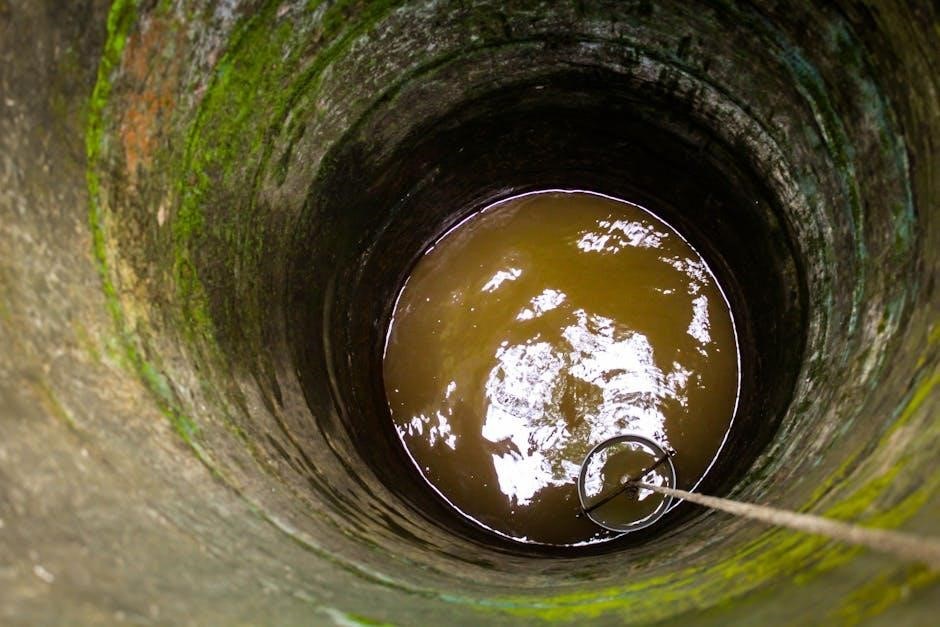
Carefully lower the assembled drop pipe and foot valve into the well casing. Securely attach a rope or cable to the foot valve assembly for controlled descent and retrieval. Gradually lower the pipe, avoiding any forceful impacts that could damage the components. Ensure the foot valve rests firmly at the bottom of the well, preventing sediment from entering the pipe.
Monitor the rope or cable to gauge the depth and prevent tangling. A smooth, controlled descent is crucial for proper operation. For PVC systems, handle with care to avoid cracking. Once positioned, test the connection by gently lifting and lowering the pipe to confirm stability before connecting the pump cylinder.
Connecting the Handle and Testing
Attach the handle and lever mechanism to the pump cylinder, ensuring a secure and smooth connection. Verify the linkage allows for full piston travel without obstruction. Slowly operate the handle, priming the pump by repeatedly moving it up and down. This action draws water up the drop pipe and into the cylinder.
Initially, expect some air and sediment; continue pumping until a steady stream of clear water emerges. Observe for leaks around connections and the foot valve. For PVC pumps, check for cracks under stress. Adjust the handle’s position for optimal ergonomics and pumping efficiency. A successful test confirms the system’s functionality.
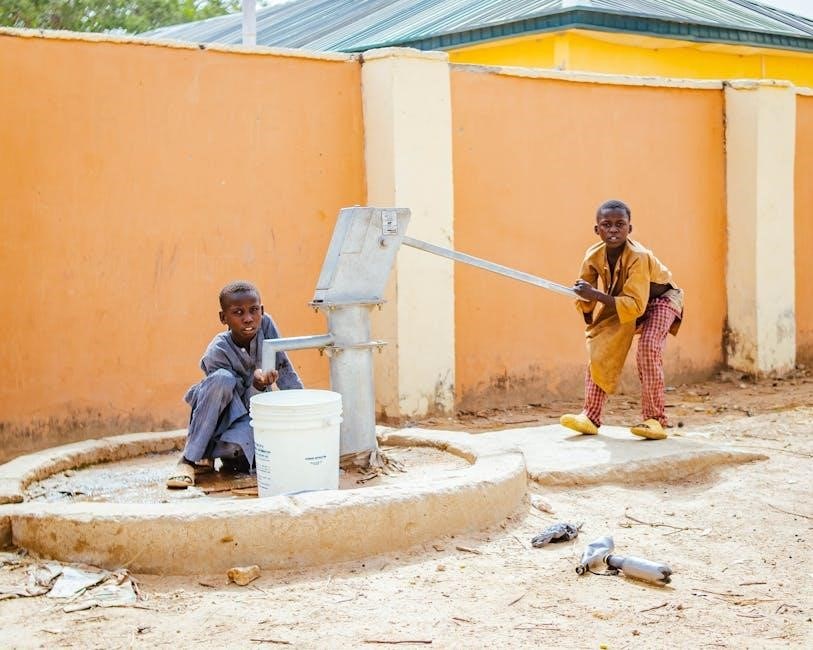
Maintenance and Troubleshooting
Regular inspection and lubrication are crucial for longevity. Address reduced flow by checking the foot valve and drop pipe for blockages or wear.
Regular Inspection and Lubrication
Consistent maintenance significantly extends the lifespan of your deep well manual water pump. Begin with a visual inspection of all components – the handle, lever mechanism, cylinder, and drop pipe – looking for signs of wear, corrosion, or damage. Pay close attention to joints and connections, ensuring they remain secure.
Lubrication is paramount. Regularly apply a suitable lubricant, such as silicone grease, to the piston and cylinder walls to reduce friction and prevent seizing. The handle pivot points also benefit from lubrication. Inspect the foot valve annually, cleaning it to remove any debris that could impede water flow. A well-maintained pump operates efficiently and reliably, providing years of service.
Dealing with Reduced Water Flow
Reduced water flow from your deep well manual pump often indicates a common issue. First, check the foot valve for sediment buildup or damage; cleaning or replacing it is frequently necessary. Inspect the drop pipe for kinks or obstructions, potentially requiring removal and flushing.
Air leaks in the system can also diminish flow; examine all connections for tightness. A partially clogged well screen or a declining water table can contribute to the problem. If the issue persists, carefully inspect the piston and cylinder for wear, as reduced sealing efficiency impacts performance. Addressing these issues promptly restores optimal pumping capacity.
Repairing or Replacing Worn Parts
Repairing or replacing worn parts is crucial for maintaining your deep well manual pump. Common failures include cracked pistons, worn leather cups, and damaged foot valves. Leather cups require periodic replacement, typically annually, depending on usage. Inspect the cylinder walls for scoring; significant damage necessitates cylinder replacement.
Foot valves often accumulate sediment, requiring cleaning or complete replacement. When replacing parts, ensure compatibility with your pump model. Utilizing high-quality materials extends the pump’s lifespan. If repairs prove extensive or uneconomical, consider a full pump replacement, evaluating PVC construction for a DIY solution.
DIY PVC Manual Deep Well Water Pump Construction
Constructing a PVC manual deep well pump is a cost-effective solution for accessing groundwater, particularly during emergencies or off-grid scenarios, reaching depths of 60 feet.
Materials Required for PVC Pump
Building a functional PVC manual deep well pump necessitates gathering specific components. Essential materials include various sizes of PVC pipe – typically 1.25”, 0.75”, and 0.5” diameters – for the pump cylinder, drop pipe, and fittings. You’ll also require PVC cement and primer for secure bonding. A foot valve is crucial to prevent water backflow, alongside check valves for directional flow control.
Furthermore, a piston, often crafted from PVC or rubber, is needed for pumping action. A handle and connecting rod mechanism are vital for manual operation. Don’t forget screws, bolts, and potentially O-rings for sealing. Depending on the well depth, a substantial length of rope or cable will be necessary for lowering and retrieving the pump assembly. Finally, consider Teflon tape for threaded connections, ensuring a watertight seal throughout the system.
Step-by-Step PVC Pump Assembly
Begin by constructing the pump cylinder using the larger diameter PVC pipe, ensuring a smooth inner surface. Next, create the piston, fitting it snugly within the cylinder, and attach the connecting rod. Assemble the foot valve at the bottom of the drop pipe, securing it with PVC cement. Connect check valves strategically within the pump body to regulate water flow direction.
Attach the handle to the connecting rod, creating a lever mechanism for manual pumping. Carefully bond all PVC joints using primer and cement, allowing ample drying time. Thoroughly test all connections for leaks before proceeding. Finally, prepare the rope or cable attachment point for lowering the assembled pump into the well, ensuring secure and reliable operation.
Testing and Optimization of PVC Pump
Initial testing involves slow, deliberate pumping to prime the system and check for leaks around all PVC joints. Observe the water flow rate, noting any inconsistencies or reduced output. Adjust the piston’s fit within the cylinder if friction hinders smooth operation. Optimize the lever arm length for ergonomic efficiency, minimizing effort required for each stroke.
Experiment with different pumping speeds to find the optimal balance between flow rate and user fatigue. Regularly inspect the foot valve for debris accumulation, cleaning as needed. Fine-tune the rope or cable length to prevent binding within the well casing. Continuous monitoring and adjustments will maximize the PVC pump’s performance and longevity.
Deep Well Pump Considerations
Water quality, pump efficiency, and long-term durability are crucial factors. Filtration systems may be needed, and ergonomic design minimizes user strain during operation.
Water Quality and Filtration
Deep well water, while often cleaner than surface water, isn’t always potable without treatment. Manual pumps draw water directly, meaning any contaminants present in the aquifer will be delivered. Diaphragm pumps are better suited for potentially contaminated sources, but filtration is still highly recommended.
Common issues include sediment, bacteria, and dissolved minerals. A sediment filter removes particulate matter, extending pump life and improving water clarity. UV sterilization effectively eliminates bacteria and viruses; For problematic mineral content, consider a water softener or specialized filtration system. Regular water testing is essential to identify specific contaminants and select the appropriate filtration method, ensuring safe and healthy water for consumption and other uses.
Pump Efficiency and Ergonomics
Manual deep well pump efficiency hinges on minimizing friction and maximizing leverage. A well-maintained foot valve prevents backflow, reducing wasted effort. Cylinder diameter and piston stroke length impact water displacement per pump action; larger isn’t always better, consider user strength.
Ergonomics are crucial for sustained use. Handle design—length, grip, and angle—directly affects comfort and reduces strain. A smooth, consistent pumping action minimizes fatigue. Consider a pump with a robust lever mechanism for increased mechanical advantage. Regular lubrication of moving parts further enhances efficiency. Prioritizing both efficiency and ergonomic design ensures reliable water access with minimal physical exertion.
Long-Term Reliability and Durability
Deep well manual water pump longevity depends heavily on material quality. PVC pumps, while affordable, may degrade over time with UV exposure and extreme temperatures. Metal components, like cylinders and pistons, require corrosion resistance—stainless steel is ideal. Regular inspection for wear and tear is vital.
Proper installation, including a secure well casing and seal, prevents contamination and structural damage. Consistent lubrication minimizes friction and extends component life. Replacing worn parts promptly avoids cascading failures. A robust design, coupled with diligent maintenance, ensures decades of reliable operation, providing a sustainable water source even during emergencies or off-grid living.