The Bhagavad Gita: A Comprehensive Guide to Sanskrit PDFs
The Bhagavad Gita, a cornerstone of Indian philosophy, boasts numerous Sanskrit PDF resources available online, rivaling the Bible in translations – especially into English, starting in 1785.
These digital texts, including those with commentaries like Balabodhini Vyakya (1893), facilitate deep study of the original verses and interpretations.
Resources like Gitabase even enable offline access to Vedic scriptures, making the Gita’s wisdom readily available for scholars and practitioners alike.
Historical Significance and Translations
The Bhagavad Gita’s enduring influence stems from its profound philosophical insights, making it one of the most translated texts globally. Its historical journey began in ancient India, evolving through oral traditions before being committed to script. The earliest known translations appeared surprisingly late, with the first English version surfacing in 1785, marking a pivotal moment in its global dissemination.
This initial translation sparked a wave of interest, leading to numerous interpretations and adaptations throughout the 19th and 20th centuries. The text’s significance isn’t merely religious; it’s considered a convergence point for diverse schools of Indian philosophy, as noted by Jawaharlal Nehru. The availability of Sanskrit PDFs has dramatically increased access to the original verses, allowing for more nuanced study.
The proliferation of these PDFs, often accompanied by commentaries in Hindi and English, demonstrates the Gita’s continued relevance and its adaptation to modern learning methods. The sheer volume of translations underscores its universal appeal and enduring wisdom, solidifying its place as a timeless spiritual guide.

Early English Translations (Pre-20th Century)
Prior to the 20th century, English translations of the Bhagavad Gita were relatively scarce, yet profoundly impactful. The initial translation in 1785 opened the scripture to a Western audience, though access remained limited due to the challenges of distribution. These early efforts often relied on interpretations filtered through Orientalist perspectives, shaping initial understandings of the text.
The availability of the original Sanskrit text was also a significant hurdle, hindering accurate and nuanced translations. Early translators frequently worked with incomplete or flawed manuscripts, leading to variations in interpretation. However, these pioneering translations laid the groundwork for future scholars and facilitated a growing interest in Indian philosophy.
The emergence of Sanskrit PDFs in recent years has ironically provided modern readers with easier access to the source material than was available to these early translators. This allows for a re-evaluation of past interpretations and a deeper engagement with the Gita’s original verses, enriching our understanding of its timeless wisdom.
Annie Besant’s Translation (1893)
Annie Besant’s 1893 translation of the Bhagavad Gita stands as a landmark achievement, representing a significant step in making the scripture accessible to a wider English-speaking audience. Her work, often accompanied by extensive commentary, reflected her Theosophical beliefs and aimed to present the Gita as a universal spiritual guide.
Besant’s translation was particularly notable for its emphasis on the Gita’s philosophical depth and its relevance to contemporary ethical concerns. The availability of her translation, and subsequently, digitized versions as Sanskrit PDFs, helped popularize the text within Theosophical circles and beyond.

Interestingly, the 1893 edition, “Srimad Bhagavad Gita with Balabodhini Vyakya,” is now readily available as a downloadable PDF, allowing modern readers to compare Besant’s interpretation with the original Sanskrit verses. This accessibility fosters a more critical and informed engagement with the Gita’s teachings, building upon the foundation laid by Besant’s pioneering work.
The Bhagavad Gita and Comparative Religious Studies
The Bhagavad Gita’s profound philosophical insights have long made it a focal point in comparative religious studies. Its exploration of dharma, karma, and moksha resonates with themes found in various spiritual traditions, prompting scholars to analyze its connections to other major world religions.
The increasing availability of Sanskrit PDFs, alongside translations, has significantly aided this comparative work. Researchers can now directly access the original text, facilitating nuanced interpretations and minimizing reliance on potentially biased translations. This access allows for a more accurate assessment of the Gita’s unique contributions and shared concepts.
Furthermore, the Gita’s emphasis on devotion, action, and knowledge provides a rich framework for understanding the diverse paths to spiritual realization. Studying the Sanskrit text alongside commentaries and comparative analyses deepens our understanding of both the Gita itself and the broader landscape of religious thought, fostering interfaith dialogue and appreciation.

Sanskrit Text and Resources
Accessing the original Sanskrit text of the Bhagavad Gita via PDFs is crucial for accurate study, offering a direct link to its philosophical roots and nuances.
Numerous online resources provide these texts, often accompanied by commentaries for deeper understanding.
Availability of Sanskrit PDFs
The digital landscape offers a wealth of Sanskrit PDFs dedicated to the Bhagavad Gita, making the scripture remarkably accessible to a global audience. Several websites and online archives host these resources, ranging from simple transliterations of the Sanskrit verses to complete editions with Hindi and English translations included.
Specifically, PDFs like “Srimad Bhagavad Gita (Sanskrit, Hindi & English)” provide a tri-lingual experience, beneficial for learners and those seeking comparative analysis. Furthermore, chapter-specific PDFs, such as “Holy Bhagavad Gita (Sanskrit) ‒ Chapter 1,” allow focused study of individual sections.
The proliferation of these PDFs reflects the Gita’s widespread influence and the growing demand for access to its original form. These resources cater to diverse needs, from academic research to personal spiritual practice, ensuring the preservation and dissemination of this ancient text in the modern era.
The ease of download and sharing contributes to its continued relevance.
Importance of the Original Sanskrit
The original Sanskrit text of the Bhagavad Gita holds paramount importance for several reasons. It represents the most authentic and direct expression of the scripture’s philosophical and spiritual teachings, untainted by interpretative nuances inherent in translations. Studying the Sanskrit allows for a deeper understanding of the subtle meanings and poetic beauty embedded within the verses.
Many commentaries and interpretations are rooted in the original Sanskrit, making it essential for scholarly analysis and accurate comprehension. The structure of the verses, the choice of words, and the grammatical constructions all contribute to the Gita’s profound impact.
Access to Sanskrit PDFs, therefore, is crucial for serious students and researchers. While translations offer accessibility, they inevitably involve a degree of subjective interpretation. Engaging with the Sanskrit directly allows one to bypass these layers and connect with the Gita’s essence on a more profound level, appreciating its timeless wisdom.
Sanskrit Text with Commentary PDFs

Numerous PDF resources offer the Bhagavad Gita’s Sanskrit text alongside insightful commentaries, catering to diverse levels of scholarship. These combined texts are invaluable for students seeking a guided understanding of the original verses. Resources like the Srimad Bhagavad Gita with Balabodhini Vyakya (1893) provide a classic interpretation alongside the Sanskrit text.
Other PDFs feature commentaries from esteemed scholars, such as Swami Sivananda, offering different perspectives on the Gita’s teachings. These commentaries often explain complex philosophical concepts, grammatical nuances, and historical context, enriching the reading experience.
The availability of these PDFs allows learners to compare and contrast various interpretations, fostering a more nuanced and comprehensive understanding of the scripture. They bridge the gap between the original Sanskrit and modern accessibility, making the Gita’s wisdom available to a wider audience, promoting deeper study and contemplation.
Gitabase System for Offline Study
The Gitabase system represents a significant advancement in accessing and studying Vedic scriptures, including the Bhagavad Gita, offline. This framework is specifically designed to allow users to delve into the Sanskrit text and associated commentaries without requiring an internet connection – a crucial feature for those in areas with limited connectivity or for focused, uninterrupted study.
Gitabase typically compiles various PDF resources, Sanskrit texts, transliterations, and translations into a searchable and navigable database. This allows users to quickly locate specific verses, explore different interpretations, and engage with the Gita’s teachings at their own pace.
The system’s offline functionality ensures that the wealth of knowledge contained within the Bhagavad Gita remains accessible regardless of external factors, promoting consistent and dedicated study. It’s a powerful tool for serious students and devotees seeking a deeper connection with this ancient scripture.

Specific PDF Resources
Numerous Sanskrit PDF versions of the Bhagavad Gita are freely available, including texts with Hindi and English translations, and those featuring commentaries like Balabodhini Vyakya (1893).
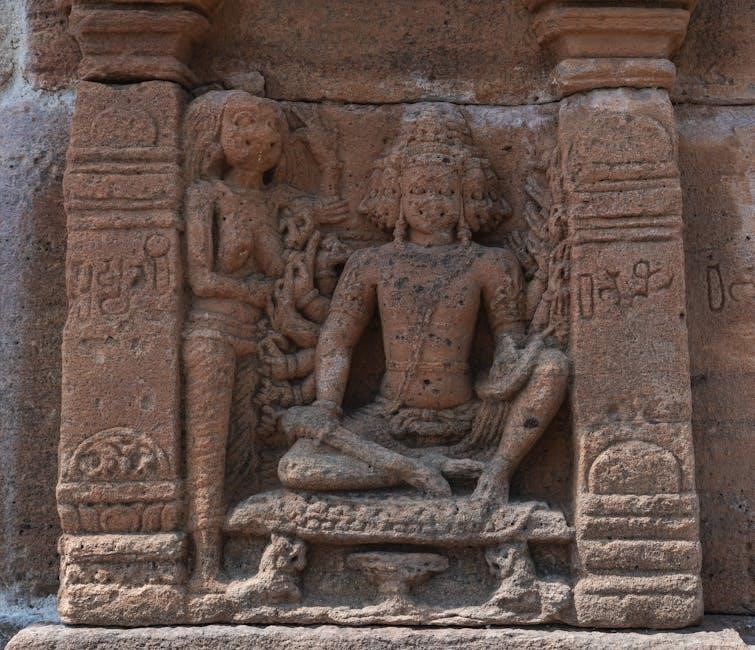
Chapter-specific PDFs, such as Chapter 1 – Arjun Vishad Yog, also exist for focused study.

Srimad Bhagavad Gita with Balabodhini Vyakya (1893)
This particular PDF resource represents a significant historical offering – a version of the Srimad Bhagavad Gita accompanied by the Balabodhini Vyakya commentary, originally published in 1893. It’s readily accessible for free download online, presented as a PDF file.
The Balabodhini Vyakya provides a detailed explanation and interpretation of the Gita’s verses, offering valuable insights for students and scholars seeking a deeper understanding of the text’s philosophical nuances.
This edition is particularly useful for those interested in tracing the history of Gita scholarship and comparing different commentaries. The PDF format allows for easy searching and referencing of specific verses and their corresponding explanations.
Researchers and devotees alike can benefit from studying this classic interpretation, gaining a richer appreciation for the Gita’s enduring wisdom and its impact on Indian thought. It’s a cornerstone resource for Sanskrit PDF study.
Srimad Bhagavad Gita (Sanskrit, Hindi & English)
This valuable PDF resource presents the Srimad Bhagavad Gita in a trilingual format – Sanskrit, Hindi, and English – making it exceptionally accessible to a wider audience. It’s available for free download, offering a comparative study opportunity for those familiar with multiple languages.
The inclusion of the original Sanskrit text is crucial for serious students of the Gita, allowing for direct engagement with the verses and a deeper understanding of their meaning. The Hindi and English translations serve as helpful guides for interpretation.
This PDF is particularly useful for learners of Sanskrit, providing a practical context for vocabulary and grammar. It also facilitates cross-referencing between the different language versions, clarifying ambiguities and enriching comprehension.
Furthermore, the resource features a connection to Prof. M. N. Chandrashekhara’s work, enhancing its scholarly value and providing a unique learning experience through chanted verses.
Holy Bhagavad Gita (Sanskrit) ⎻ Chapter 1
This PDF provides a focused study resource: Chapter 1 of the Holy Bhagavad Gita, presented entirely in Sanskrit. Available for free download as a PDF or text file, it’s ideal for dedicated Sanskrit scholars and those committed to understanding the Gita in its original language.
Chapter 1, known as “Arjun Vishad Yog” (The Yoga of Arjuna’s Sorrow), sets the stage for the entire discourse. Studying it in Sanskrit allows for a nuanced appreciation of the poetic and philosophical depth of the text, unmediated by translation.
This resource is particularly valuable when combined with commentaries and translations, enabling a comprehensive understanding of the verses. It serves as a foundational text for deeper exploration of the Gita’s teachings.
Many yoga scriptures, including the Gita, are comprised of concise Sanskrit verses, making focused study of individual chapters like this one a practical approach to learning.

Related Texts and Context
Exploring texts like the Gita Govinda enriches understanding of the broader spiritual landscape alongside the Bhagavad Gita, both rooted in Sanskrit tradition.
The Gita’s influence permeates Indian philosophy, representing a convergence of ancient thought, accessible through numerous Sanskrit PDF versions;
Gita Govinda and its Connection
While distinct from the Bhagavad Gita, Jayadeva’s Gita Govinda, a 12th-century poem, shares a crucial connection through its Sanskrit foundation and devotional focus.
Both texts are composed in Sanskrit, making them accessible through similar PDF resources, though the Gita Govinda centers on the love of Radha and Krishna, differing from the Bhagavad Gita’s philosophical discourse;
Studying both works provides a richer understanding of the breadth of Sanskrit literature and the diverse expressions of Hindu spirituality.
PDFs of the Gita Govinda often include transliterations and commentaries, mirroring the resources available for the Bhagavad Gita, aiding comprehension for modern readers.
The availability of these Sanskrit PDFs allows for comparative analysis, revealing shared poetic devices and philosophical undercurrents within the broader tradition.
Ultimately, exploring the Gita Govinda alongside the Bhagavad Gita enhances appreciation for the depth and artistry of Sanskrit devotional poetry.
The Bhagavad Gita in Indian Philosophy
The Bhagavad Gita occupies a central position within the landscape of Indian philosophy, synthesizing diverse schools of thought – Samkhya, Yoga, Vedanta, and Bhakti – into a cohesive framework.
Its influence is so profound that, in India, it’s widely considered a text where all major lines of ancient Indian philosophical development converge, as noted by Jawaharlal Nehru.
Access to Sanskrit PDFs of the Gita, often accompanied by commentaries from various philosophical traditions, is crucial for understanding these nuanced interpretations.
These digital resources allow scholars to trace the evolution of philosophical ideas and their application within the Gita’s narrative.
Studying the original Sanskrit text, via PDF, reveals subtleties lost in translation, deepening engagement with its philosophical arguments.

The widespread availability of these PDFs democratizes access to this foundational text, fostering continued exploration of its enduring relevance to Indian thought.
Common Misspellings and Transliteration Issues
Transliterating Sanskrit, particularly the title Bhagavad Gita, presents consistent challenges, leading to frequent misspellings even in English. A common error is “Bhagavat gita” – omitting the ‘d’ and using ‘vat’ instead of ‘vad’.
This incorrect form, increasingly prevalent in Russian language usage, deviates from standard transliteration practices and can hinder accurate searches for Sanskrit PDFs.
Variations in diacritic markings within PDF files also pose issues; inconsistent use of long and short vowels, or nasal sounds, can affect searchability and comprehension.
Furthermore, different transliteration schemes (IAST, Harvard-Kyoto) contribute to inconsistencies across digital texts.
When seeking Sanskrit PDFs, users should be aware of these potential discrepancies and employ flexible search terms, accounting for common variations.
Careful attention to accurate transliteration is vital for accessing and studying the Gita’s original verses effectively.